
COMPLIANCE INSPECTIONS
Emergency Eyewash & Shower Inspections.
An eyewash station is only useful if it works on the day someone needs it. We inspect and service yours on your site, anywhere in Auckland, against AS 4775:2007, and record it against your register.
We cover:
Plumbed eyewash and drench showers
Portable eyewash units
Servicing and refilling
Tagging and inspection records
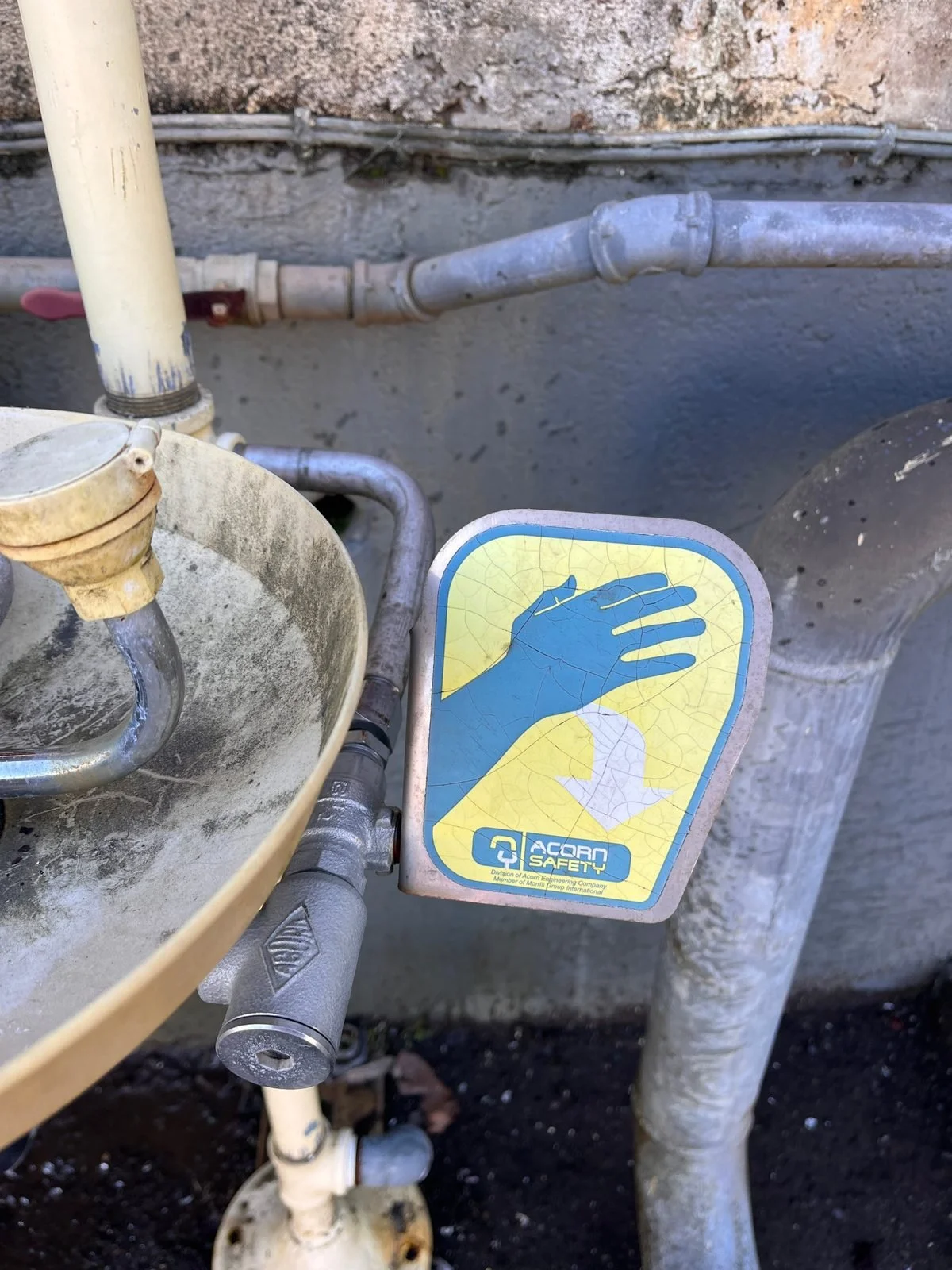
Checked against AS 4775:2007
An eyewash station is only useful if it works the moment someone needs it, so we test performance, not just appearance.
What we check
- Flow rate and duration — confirms the unit delivers the required volume of water for at least 15 minutes.
- Water temperature — checked to confirm it is within the required range of 16 to 38°C. Water that is too cold or too hot can make an injury worse or put someone off a full flush.
- Activation — confirms the hands-free valve opens within the required time and stays open on its own, so an injured person doesn't need to hold it.
- Spray pattern and mounting height — measured against the standard's positioning requirements, so the water reaches and covers the eyes, face or body correctly.
- Physical condition — housing, spray heads and dust covers checked for damage, corrosion or blockages.
- Location and access — the path to the unit is clear, and it is within the required distance of the hazard, on the same level.
- Signage and lighting — the unit is clearly signed, visible and well lit.
How we do it
We activate each unit to test real flow, pressure and temperature, not just check that it is plumbed in. Results are measured and recorded against AS 4775:2007. Any fault, such as low flow, poor temperature control or a blocked head, is flagged and reported to you, so it is fixed before it is ever needed in an emergency.
We recommend your staff activate each unit once a week between inspections.
Eyewash $140 + GST. Safety shower $140. Combined eyewash and shower $160. Inspected every year.
Site visit $150 + GST, including travel, full compliance reporting and physical inspection tags. Your first site visit is free.
Emergency eyewash and shower inspections
Weekly checks and the annual inspection
An eyewash station is only useful if it works on the day someone needs it, and most failures are a closed valve or a blocked line rather than a broken unit. That is why the standard asks for two different things at two different intervals.
Weekly — activate each plumbed unit to clear the lines. Your staff.
Monthly — check drench hoses for wear and loose connections.
Annually — full inspection against AS 4775:2007. That is us.
Common questions
How often should an eyewash station be tested?
Plumbed eyewash units and safety showers should be activated at least weekly to clear the supply lines and prove they work, and inspected annually against AS 4775:2007. Drench hoses are checked monthly for wear. The weekly activation is a job for your own staff. The annual inspection is ours.
Who does the weekly activation?
Your staff. It takes a minute and it is the single most useful thing you can do between our visits. We will show you how, leave you a simple record sheet, and check the record when we come back.
What do you check on the annual inspection?
Water flow and pattern, temperature where it applies, the condition of the bowl, nozzles and dust caps, signage and lighting, that the unit is unobstructed and within reach of the hazard, and that the supply valves are open and not isolated. Every unit is tagged and recorded in your asset register.
Book a free site visit.
Your first 10 PPE inspections are free. So is your first site visit, and setting up your inventory. Worth $1,000.